

Contents

Publications


Publications

Contents

Survival of the fittest: cruise lines look to life beyond coronavirus
The pandemic looked like an extinction-level event, but operators have proven themselves highly adaptable writes Marlink president maritime Tore Morten Olsen


The cruise market is beginning to climb out of the crater caused by coronavirus, but the long-term health of the industry remains fragile. For evidence we need to look no further than the sale for recycling of some cruise vessels that only months ago would have found willing buyers.
It is a demonstration of the challenges the industry still faces and also of the hard choices passenger ship operators must make as they seek to safely resume volume operations. In general, it is volume that marks out success in this segment, but in reorganising their fleets, the industry is signalling something else too.
Vessels that might have sailed profitably a few years ago are subject to much tighter requirements for efficiency, automation and connectivity. If the costs of retrofit and upgrades cannot be justified, then the calculation must be that it is better to retire them from service now.
But despite the severity of the infection, this is not the end for the cruise ship sector. The sector has proven itself remarkably adaptive to change and quick to evolve in the face of new regulations and realities. Always front runners in adopting new technology, cruise lines will more than ever need the ability to predict the future.
This is both a financial story and one about environmental sustainability; the trading environment of the next 10 years will look quite different to that of the last decade. It is likely that cruise operators will be the first adopters of new technologies and platforms that enable them to increase efficiency and lower emissions compared to today’s numbers while gaining back customer numbers.
So, what new measures will the cruise lines take in the post-Covid-19 environment? Today the ship’s critical systems covering safety, performance and operational efficiency are already connected. Tomorrow they will need to add new layers of connectivity which also could cater for all the assets on board a vessel which are not connected today.
In a post-Covid-19 environment, what will be monitored and transmitted as data to shore-based control centres will be more than traditional elements like uptime on wifi on board, instead it will be new aspects such as how often areas are being disinfected or tracking passenger movements 24/7.
For cruise lines moving forward into the new reality, a greener footprint and smarter vessel operations are not only important from a compliance and reputation point of view. They also define what destinations lines can offer in the future to new and more sophisticated passenger demands with regards to new and different guest experiences.
The services that enable this increasingly come in bundles comprising hybrid connectivity, networks defined by applications and managed services that provide alerts and reports, insights and intelligence on performance of systems and software. Machine learning powered by artificial intelligence, simulation and virtual reality will become central components of new technology in the cruise industry.
Nobody in the cruise market expects a quick return to normal, in fact, normal will be something different in the future. What we can see is a willingness to accept the choices necessary to achieve to a sustainable level of operations. For that, operators need to think about how connected ship systems can contribute to a cleaner and profitable future.
Despite some older assets heading to the recycling yards, cruise lines have already proven they are no dinosaurs; they can adapt to survive, evolve their business plans and operating platforms. With new technology on board they may yet prove it is not just the smartest that survive but those most able to respond to change.
Marlink will explain connectivity requirements for optimising ship performance through data analytics during Riviera’s Unleashing the power of data to optimise vessel performance webinar on 8 September, during Riviera’s Vessel Optimisation Webinar Week. Use this link for more details and to register for webinars


Related to this Story

New coating inspection service from Hempel


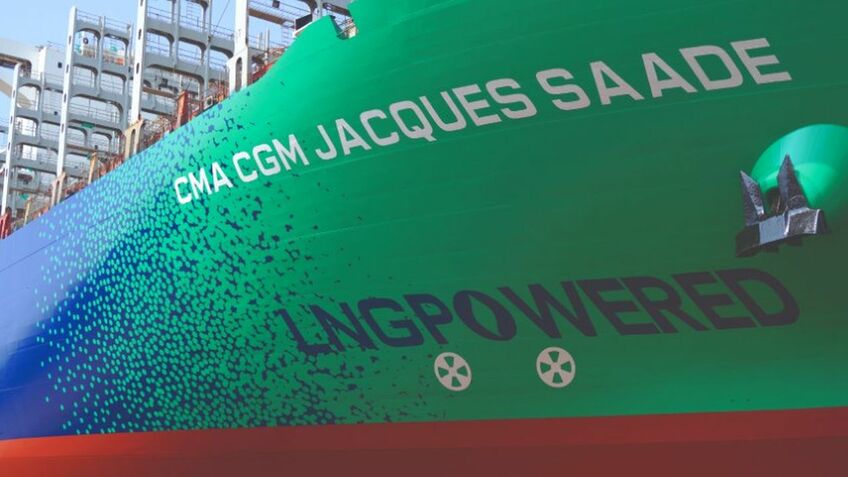
CMA CGM hit by cyber attack
Events

Marine Propulsion Webinar Week
 29 Sep 2020
 BST
BST
Maritime Air Pollution, Europe
20 Oct 2020CET
Maritime Hydrogen & Fuel Cells, Europe
26 Oct 2020GMT
Maritime Hybrid & Electric, Europe
28 Oct 2020GMT
Quick Links
London Office
Riviera Maritime Media Ltd,Mitre House, 66 Abbey Road,
Enfield EN1 2QN, UK
Phone: +44 20 8364 1551
Email: [email protected]
Singapore Office
Riviera Maritime Media Singapore Pte Ltd,1 Fusionopolis Place, 03-20, Galaxis,
Singapore 138522
Phone: +65 6809 1278
Email: [email protected]


