

Contents

Publications


Publications

Contents
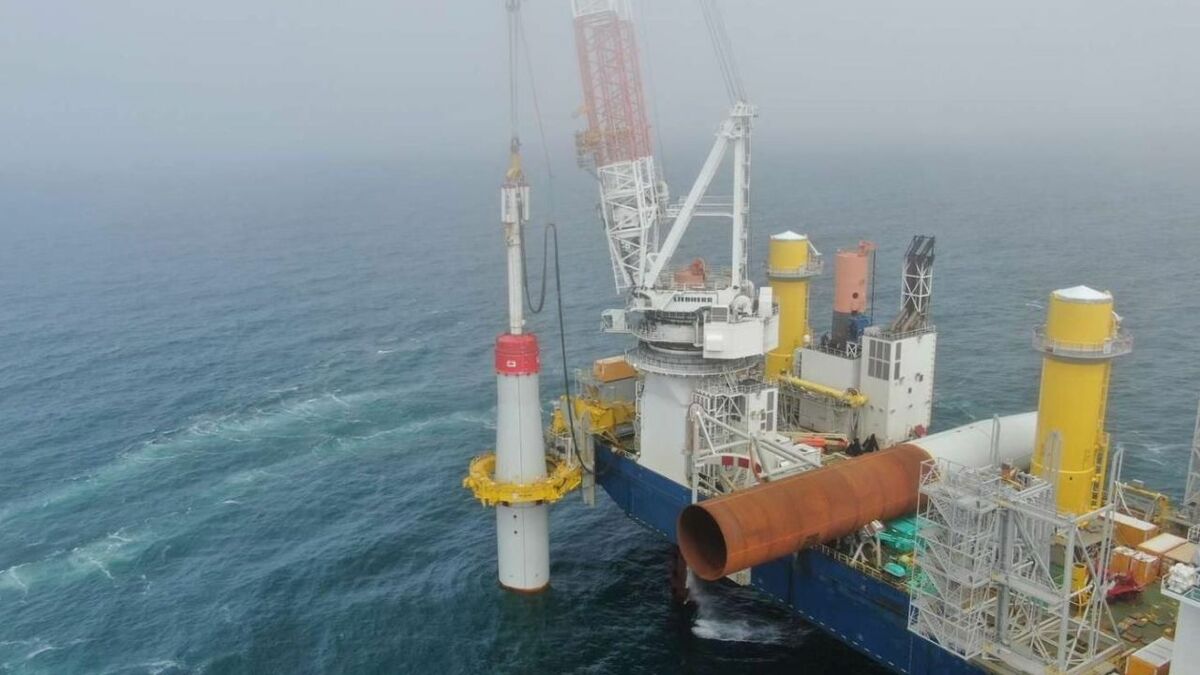
Balancing risk and reward: taking the pulse of the US offshore wind industry
The US offshore wind market could be huge. European companies have experience aplenty to offer, but finding the right partner to work with is essential


In OWJ’s webinar, ‘Bringing European experience to the US Offshore Wind market – exploring partnerships’, delegates heard that the US offshore wind industry has tremendous potential for European companies that want to get involved, but there are risks that need to be addressed and it is essential for potential participants to research the market thoroughly. The webinar was part of OWJ’s first Offshore Wind Webinar Week.
It was sponsored by maritime and offshore law firm Winston & Strawn – whose maritime practice partner and chair Charlie Papavizas told delegates that the much-discussed Jones Act was an important part of the puzzle but by no means a barrier to successfully working in the US. Delegates at the event were also told in no uncertain terms that before entering the US market it is essential to ‘do the leg work.’
Delegates heard that, compared to other export markets for offshore wind, the US is quite possibly the most difficult in which to work.
But they also heard that being able to draw on European experience will be a huge boost for the US offshore wind market. As Arup energy infrastructure leader Cameron Dunn put it, “You have to identify where the risks are. There are big risks, but someone is going to figure that out and take advantage of the market by being first mover. If you do that, the opportunities are huge.”
Mr Papavizas told delegates that European companies with experience of offshore wind and US firms with local knowledge could be the perfect way to exploit opportunities in the American market. Joint ventures are the way to go, he said, but it is essential to get the structure right. Meeting the various legal requirements involved is not straightforward, particularly when it comes to vessel ownership and operations, he said, but there are options that work.
Edda Wind chartering manager Håkon Vevang said the company had already found its ideal joint venture partner in Foss Maritime. “You need an experienced maritime operator with an impeccable record, that understands the rules and regulations in the US,” he explained. “You also really need to find a partner that is a good cultural fit, with the same world view, that you can trust. Finding that partner takes time.”
Mr Vevang also had some interesting thoughts on costs. He told the webinar that building service operation vessels (SOVs) in the US is a lot more expensive than doing so in Europe, and that it takes longer.
“We believe it will be at least 80% more expensive to build SOVs in the US,” he said. “In Europe, once we have signed a deal, we can build an SOV in two years. In the US, it will probably take three. Crew costs are also going to be higher. At this stage, we do not see a reason to build vessels on spec, either. And we would only build a vessel in the US once we had a long-term contract.” But despite this, Edda Wind still sees newbuilds as the best way to address the US market, as it does in Europe.
Seacat Services managing director Ian Baylis has been working with the first crew transfer vessel company in the US, Atlantic Wind Transfers, for several years. Atlantic’s first crew transfer vessel, assigned to the Block Island windfarm, is a sister vessel to one of Seacat Services’ boats.
Mr Baylis has provided consulting to Atlantic Wind Transfers about vessels, operations and training, and also believes that building vessels in the US will be more expensive. A US-built crew transfer vessel might be 20% more expensive to build than its counterpart in Europe, he said. Labour and social costs are also high, but as Mr Baylis put it, if you adopt the right model, there are significant opportunities in the US industry.
Mr Dunn highlighted unresolved issues facing the US market: one of the most important is, where will fabrication work on foundations and substations take place? He sees a near-term opportunity for experienced oil and gas companies in the Gulf of Mexico to build substations, but where foundations will be built in the numbers needed and by whom is unclear.
European experience can help – and European fabricators have already signed agreements with US firms – but the US market differs in one very important respect to Europe, because the American market is being addressed state-by-state and states are, in effect, competing against one another to be first movers.
Mr Dunn also highlighted another important difference that could shape the way the offshore wind industry develops in the US. In Europe, he said, the offshore wind industry had been built up out of the marine supply chain. In the last decade, he said, the marine supply chain had been ‘hungrier’ than the oil and gas supply chain in the US. As a result, it had been prepared to innovate. Will the oil and gas chain in the US now be prepared to show the same approach to innovation, he asked?
The webinar also included a number of revealing polls, including the following:
In your opinion will individual US states reach their own renewable energy targets in the next five years?
Do you consider the US or Taiwan offshore wind market as most difficult to operate in?
Do you agree that the US offshore wind market depends on the results of the US presidential election?
The webinar was part of Riviera Maritime Media’s ongoing multi-week series of webinars, including Offshore Wind Webinar Week.
You can view the webinar, in full, in our webinar library.
And you can sign up to attend one of our many upcoming webinars on our events page.
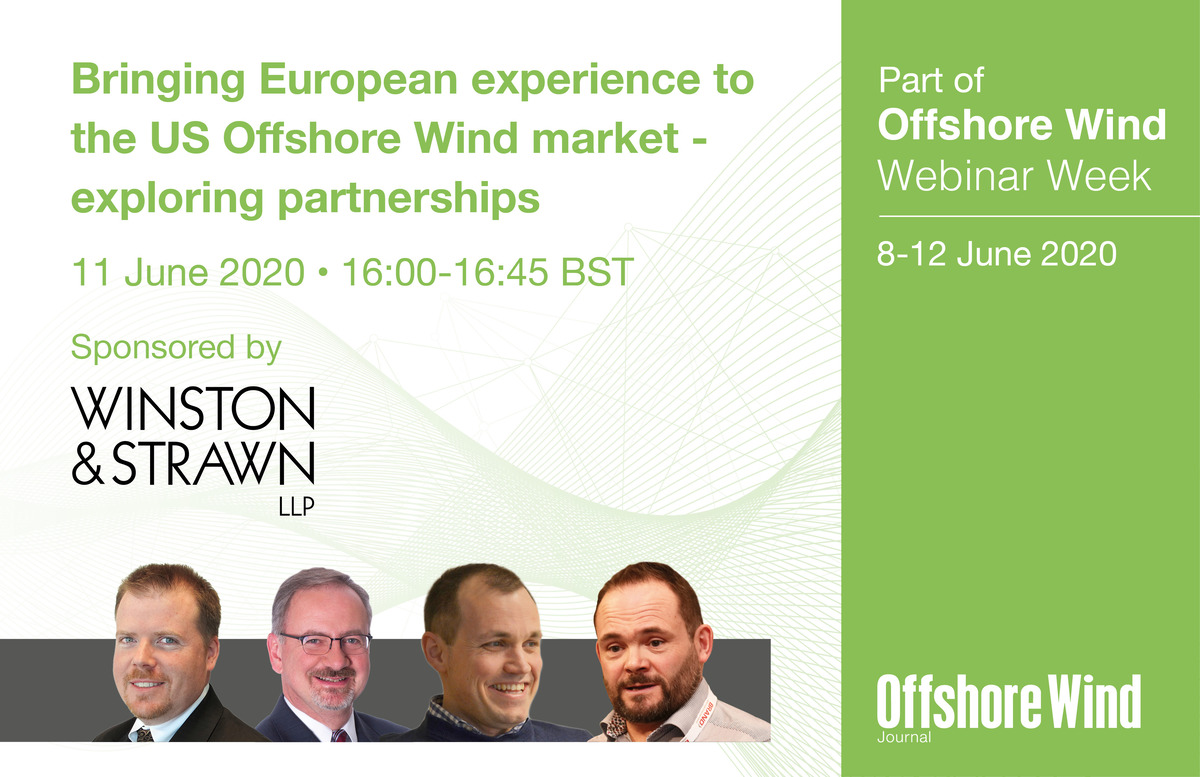
Panellists (left to right):

Related to this Story

Events

Ship Recycling Webinar Week
 15 Sep 2020
 Online
Passenger Shipping Webinar Week
21 Sep 2020ONLINE
Marine Propulsion Webinar Week
29 Sep 2020ONLINE
Smart Tug Operations Virtual Conference, Asia
13 Oct 2020SGT - ONLINE
Quick Links
London Office
Riviera Maritime Media Ltd,Mitre House, 66 Abbey Road,
Enfield EN1 2QN, UK
Phone: +44 20 8364 1551
Email: [email protected]
Singapore Office
Riviera Maritime Media Singapore Pte Ltd,1 Fusionopolis Place, 03-20, Galaxis,
Singapore 138522
Phone: +65 6809 1278
Email: [email protected]


