

Contents

Publications


Publications
Contents
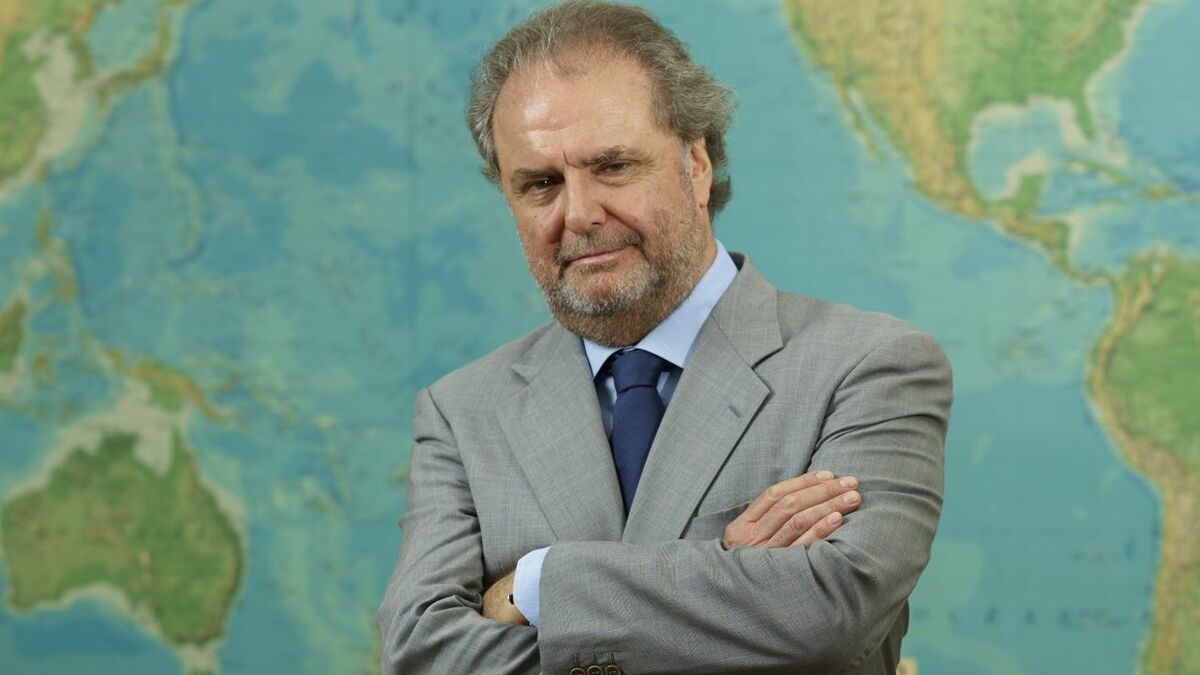
Industry leader: Paolo d’Amico, chairman, INTERTANKO and CEO, DIS
The well-run INTERTANKO allows him to work in the tanker organisation and his commercial business simultaneously


Tankers have been a d’Amico family business since the 1940s and in some respects, it is no surprise that Paolo d’Amico would one day lead the company. He was also vice-chairman of INTERTANKO for four years, before taking over the chairman role when Nikos Tsakos stepped down in November 2018.
Mr d’Amico took on the INTERTANKO chairmanship ahead of the introduction of the IMO 2020 marine fuel sulphur cap and was under no illusions as to the difficult path that lay ahead. “Commercial sustainability of the tanker industry will remain high on our agenda, as will a continued push for operational excellence and environmental protection,” he said.
“I look forward to chairing INTERTANKO as it continues to advance the interests of its members in the various legislatorial arenas, not least as we move towards the next big ticket item in the shape of the 2020 sulphur cap,” he said prior to its introduction in January 2020.
This was also when Marco Fiori stood down as chief executive of Milan-listed product tanker owner d’Amico International Shipping (DIS). Mr d’Amico stepped in to take over both executive roles. The takeover was a natural one, as he told Tanker Shipping & Trade at the time. “I was already the executive chairman and I became CEO when [the previous CEO] left at the end of 2018.”
He added “At the same time, INTERTANKO nominated me for chairman. I now have two major, but very different, jobs.”
At INTERTANKO, Mr d’Amico’s role does not require day-to-day command and control, freeing him up somewhat to concentrate on the strategic leadership aspect.
His role is more ‘hands on’ at d’Amico International Shipping, requiring a daily presence and leadership – where his approach has been informed by various sources. “Some is certainly from the education that was given to me. But most is from my background. I lost my father when I was 26,” says Mr d’Amico. At that still relatively young age he was expected to take over the businesses and carry on the family tradition. It was a steep learning curve. “I had to swim or drown. I had to rely on good common sense and I quickly learnt how to deal with people. I also listened and began to understand the qualities needed to work as a team. It is not something that can be taught. I had to quickly educate myself in these matters.”
He continues “I know the worst feeling is that someone is trying to micro-manage you. When you have chosen the people, you have to let them do the task.”
With regards to his own abilities he says “If I make a mistake, my people are honest with me. I am not surrounded by people who simply say ’yes’ all the time.” He concludes with a smile “We can discuss and sometimes, reluctantly, I agree.”


Related to this Story


Events

Offshore Wind Webinar Week
 02 Nov 2020
 ONLINE
Maritime Cyber Risk Management
03 Nov 2020GMT
Ballast Water Webinar Week
04 Nov 2020ONLINE
Offshore Support Journal, Middle East
09 Nov 2020GST
Quick Links
London Office
Riviera Maritime Media Ltd,Mitre House, 66 Abbey Road,
Enfield EN1 2QN, UK
Phone: +44 20 8364 1551
Email: [email protected]
Singapore Office
Riviera Maritime Media Singapore Pte Ltd,1 Fusionopolis Place, 03-20, Galaxis,
Singapore 138522
Phone: +65 6809 1278
Email: [email protected]


