

Contents

Publications


Publications

Contents
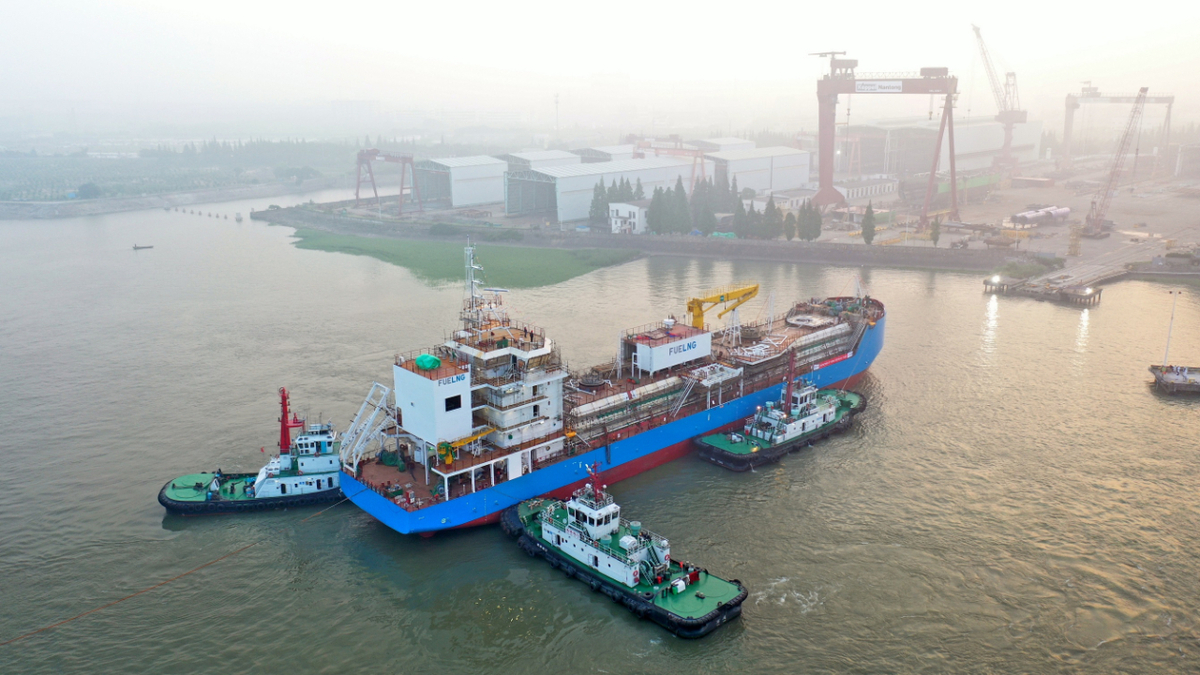
First LNG bunker vessels for Singapore, Japan launched
Asian LNG bunkering infrastructure continues to advance, with the launch of Singapore’s first LNG bunkering vessel for FueLNG at Keppel Nantong Shipyard in China


Just two weeks ago, Japan’s first LNG bunker vessel (LNGBV) was launched at the Sakaide Works of Kawasaki Heavy Industries. The LNGBVs are two of 17 under construction or in discussion for Asia, according to data compiled by class society DNV GL.
A joint venture between Keppel Offshore & Marine Ltd (Keppel O&M) and Shell Eastern Petroleum (Pte) Ltd, FueLNG received a grant of about US$2.25M from the Maritime and Port Authority of Singapore (MPA) to support the vessel’s construction built under a US$37.5M contract with Keppel. Construction of the 7,500-m3 LNG bunkering vessel is on schedule to be completed in Q4 2020.
Once completed, FueLNG will deploy the LNG bunkering vessel in the Port of Singapore to provide regular ship-to-ship LNG bunkering services.
It supports initiatives implemented by the MPA to increase the adoption of LNG as a marine fuel, facilitating the growth of Singapore as a global LNG bunkering hub.
FueLNG general manager Saunak Rai said, “There are a growing number of LNG-fuelled vessels in the world and FueLNG is well-positioned to seize LNG bunkering opportunities in Singapore.” Mr Rai added “We have safely completed more than 200 truck-to-ship bunkering operations with no incidents, a testament to our high standards and operational expertise. Building Singapore’s first LNG bunkering vessel demonstrates FueLNG’s confidence in LNG as a marine fuel. The vessel will enhance our range of services and boost our efforts to further increase the availability of LNG in the market.”
FueLNG’s bunkering vessel will further enhance the LNG bunkering infrastructure in Singapore and support the growth of the industry through the development of best practices and technical standards. The expansion of the LNG bunkering infrastructure will also create more opportunities in adjacent sectors in Singapore, such as ship design, construction, operation and repair, and LNG trading.
Equipped with dual-fuel propulsion, the vessel will operate on either LNG or marine diesel oil. Based on an MTD 7500U LNG design developed by Keppel O&M’s technology arm, Keppel Marine and Deepwater Technology (KMDTech), the LNGBV is high manoeuvrability, allowing bunkering operations to be performed without tug assistance, compatible with a wide range of vessels and propulsion and power management systems that optimise fuel consumption. The vessel has a filling rate range of up to 1,000 m3 of LNG per hour and is able to supply LNG to various types of vessels at heights ranging from 3 m to 23 m above water level.
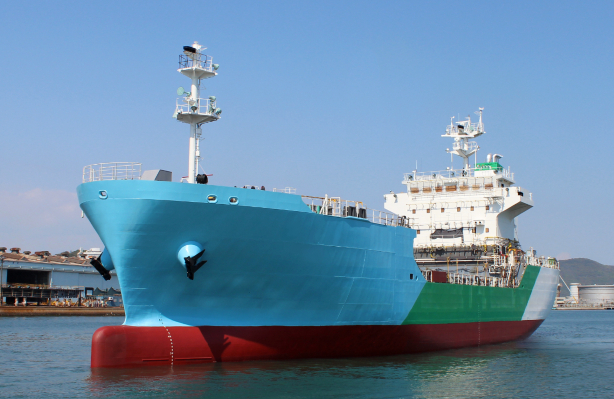
Japan’s first LNGBV
Meanwhile, Japan’s first LNGBV is less than half of the capacity of that of FueLNG’s vessel. With a length of 81 m and beam of 18 m, the LNGBV is being built for Central Shipping Co, a Japanese joint venture of Kawasaki Kisen Kaisha (K-Line), JERA Co, Ltd, Toyota Tsusho Corporation and NYK Line. Expectations are that the 3,500-m3 LNGBV will begin commercial operations in September, with the LNG supplied by Central LNG Marine Fuel Co. JERA’s Kawagoe Thermal Power Station will be the homeport for the vessel, providing ship-to-ship LNG fuel supply business for ships in central Japan.
NYK Line jointly owns the first purpose-built LNG bunkering vessel, Engie Zeebrugge, in Europe. Built to Bureau Veritas class rules at South Korea’s Hanjin Heavy Industries & Construction, Engie Zeebrugge has an overall length of 107.6 m, beam of 18.4 m and capacity of 5,000 m3.
Riviera will host a week of free to attend 45-minute webinars focused on gas carrier tankers and terminals commencing 15 June. Register your interest now


Related to this Story


Events

Maritime Hybrid, Electric and Fuel Cells Webinar Week
 27 Jul 2020
 ONLINE
Maritime Cyber Security Webinar Week
04 Aug 2020ONLINE
Offshore Webinar Week
11 Aug 2020ONLINE
Tanker Shipping & Trade Webinar Week
18 Aug 2020ONLINE
Quick Links
London Office
Riviera Maritime Media Ltd,Mitre House, 66 Abbey Road,
Enfield EN1 2QN, UK
Phone: +44 20 8364 1551
Email: [email protected]
Singapore Office
Riviera Maritime Media Singapore Pte Ltd,1 Fusionopolis Place, 03-20, Galaxis,
Singapore 138522
Phone: +65 6809 1278
Email: [email protected]


