

Contents

Publications


Publications

Contents
Digitalisation starts at the top
A company-wide approach from the top down is required to successfully achieve digital transformation


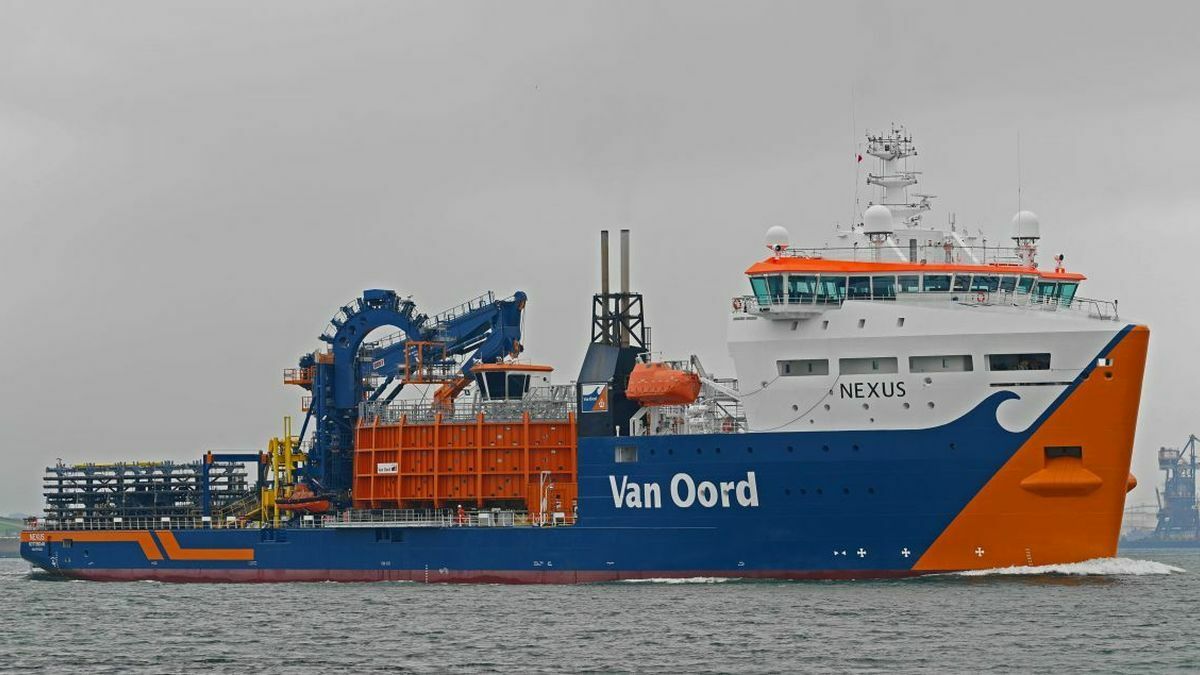
Digital transformation of an offshore and marine contractor needs to start with the top management. Once top executives are on board and understand the technology, then digitalisation cascades down into all areas of operation. This is the opinion of Van Oord director for digital transformation Mare Straetmans.
He presented his thoughts during Riviera Maritime Media’s How to develop and implement a digital performance strategy to optimise vessel performance webinar on 14 May.
“Transformations are hard and digital ones are harder,” said Mr Straetmans, and in offshore contracting it is probably even harder.
“Everything that comes to make an impact with digital in your company, on the ships and on the shore, is very much about understanding where the opportunities are and how to go about grasping them,” he said.
Van Oord has certainly done this with the help of Mr Straetmans, who has been able to integrate digitalisation into the company’s operations. But this is not the case for other vessel owners.
“What I have seen with a lot of the leadership in different companies is that it is still difficult to understand what digitalisation is about,” he said.
“We have difficulties as a sector in understanding what digitalisation is and what it can bring to us,” Mr Straetmans continued.
To overcome this, owners need a change in attitude to help grasp new opportunities in this period of disruption, following the coronavirus pandemic and the Q1 slump in oil prices.
“We need to be more agile, which requires a lot of new capabilities in different fields,” said Mr Straetmans.
He thinks leaders need hyper-awareness, informed decision making and rapid execution of digital technologies. “It is crucial to make sure that you know where to develop capabilities if you want to build something digitally for your clients or for yourself,” he said.
Owners need information on each vessel in their fleet, their maintenance and when clients want to inspect ships and the assistance they expect. “You need to know what technologies are around that can help,” said Mr Straetmans.
“Hyper-awareness is a very crucial aspect of leadership in the digital age,” he said. Owners and leaders need to be engaged with developments, visionary in their investments, adaptable to conditions and humble enough to identify when things are going wrong.
“It is very challenging, because it means you need to be willing to be challenged on what you think you know. There is always more to learn and understand,” Mr Straetmans explained. He stressed the need to employ specialist people to assist vessel operators in deploying digitalisation. This could mean working within partnerships to improve operations.
“We have difficulties in understanding what digitalisation is and what it can bring to us”
“I see being agile and able to test and build digitalisation for operations as crucial aspects,” said Mr Straetmans.
Van Oord has adjusted to new technology and partnerships that are helping it develop new pilots and proof-of-concepts using digital technology.
It has developed principles to focus its development projects. “On every pilot we are doing on a vessel, we have selected the project on these principles,” Mr Straetmans explained.
“We do not do ‘nice to have’ projects, nor projects just to make 5% gains. We only do projects where we think we can make a 50% increase of efficiency, or 50% reduction in costs, or 50% more impact for our customers,” he said, adding: “We ask who is it for? Is there real value? Is it a problem worth solving? As we want to make a real impact.”
Van Oord starts with trials and, if they work and if the client is happy, it will scale these up. “It is crucial to fail-fast,” said Mr Straetmans. “If it is not working or if it is not bringing any value, we will kill it. We do not keep pet projects going for a long time.”
Digital transformation must make an impact, and Van Oord has found that it can with the right technology, leadership and changes in culture.
Digitalisation toolbox
Mr Straetmans was joined on the panel during the webinar by DNV GL business and segment director for special ships Arnstein Eknes, who expects vessel operators to achieve more than 30% cost savings by using the total digitalisation toolbox.
As part of this box, vessel operators can achieve 10-15% energy efficiencies through data-driven optimisation. Another 10-15% could be achieved through centralisation of tasks, remote monitoring and control, plus 2-3% if remote inspections are adopted and 2% when operators introduce smart maintenance, he highlighted.
Some of these benefits can be achieved through vessel owner investment, but others are controlled by charterers, if they pay the fuel costs, Therefore, vessel owners need solid reasoning and co-operation with charterers before investing in digitalisation.
“Hyper-awareness is a crucial aspect of leadership in the digital age”
“Know your business case before you enter the toolbox, because the box is really big,” Mr Eknes said. “It is advanced and moving fast, so you need to know what you want from it.” This may not just be about energy savings; it could be improving internal efficiencies, improving safety and maintenance, or reducing downtime.
“Perhaps there is something to help you can create value for your customers?” Mr Eknes asked. “Or where you can see the opportunity for delivering completely different things than what you are doing today.”
Strategy for investment
Van Oord has four principles to drive business value for clients and its business through digitalisation:
- Focus on the client: involve the client from the start and build solutions for their problems
- Prioritise on business value: select what solutions to build on the size of the business value they will deliver
- Start small, then scale: quickly build a minimum viable product of the solution that adds value for the client and build from there
- Fail fast: focus on execution (instead of planning) and be ready to kill projects that do not meet anticipated objectives
Improving internal efficiencies and reducing cost of operations can involve improving knowledge of the vessel fleet, seafarers and onshore teams. It could involve continuous improvement using new digitalisation tools, or replacing some manual tasks with automation software or a data-centric approach.
“Improving internal efficiencies is very much about savings and creating value for customers,” said Mr Eknes. “There is the access to data and connectivity to make better decisions and new services that you could not do without the new tools.”
This may lead to the adoption of different maintenance practices on a vessel or across a fleet.
“The condition-based systems that are coming are not always about reducing costs; they are about connecting systems, giving you better decisions so that you are avoiding downtime and increasing the availability of the fleet,” Mr Eknes explained.
For example, vessel owners can achieve 15.2% energy efficiencies through incremental investments, including 3.2% on improving ship performance, another 6.4% by tackling voyage performance and operations; then another 5.6% on optimising engines and consumables.
Vessel operators can also improve their external effectiveness to secure their income, which has become increasingly tough in 2020 due to coronavirus and sinking oil prices.
External efficiencies can include improving transparency of vessel operations and ship availability, reducing emissions and customers’ total cost of operations, said Mr Eknes.
“Transformational change requires collaboration to change work processes and build trust,” he said.
“It is important to create a culture and stimulate behavioural change, to know what is actually driving the reasons and the resources that you want to achieve,” Mr Eknes concluded.
Watch the How to develop and implement a digital performance strategy to optimise vessel performance webinar in our webinar library


Related to this Story


Events

Maritime Hybrid, Electric and Fuel Cells Webinar Week
 27 Jul 2020
 ONLINE
Maritime Cyber Security Webinar Week
04 Aug 2020ONLINE
Offshore Webinar Week
11 Aug 2020ONLINE
Tanker Shipping & Trade Webinar Week
18 Aug 2020ONLINE
Quick Links
London Office
Riviera Maritime Media Ltd,Mitre House, 66 Abbey Road,
Enfield EN1 2QN, UK
Phone: +44 20 8364 1551
Email: [email protected]
Singapore Office
Riviera Maritime Media Singapore Pte Ltd,1 Fusionopolis Place, 03-20, Galaxis,
Singapore 138522
Phone: +65 6809 1278
Email: [email protected]


