

Contents

Publications


Publications

Contents
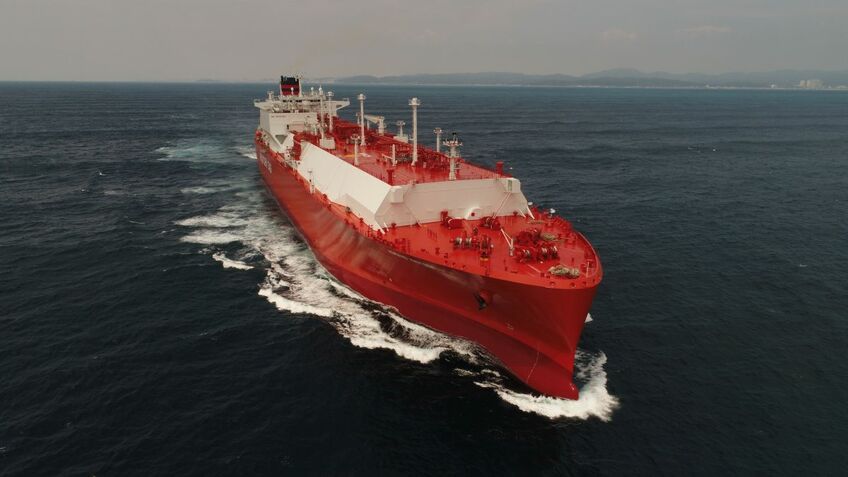
Silicone-based paints: LNG application and cutting dry dock time
Silicone-based paints cost more but are claimed to perform better in reducing hull resistance and have found favour on LNG ships


Knutsen OAS Shipping has chosen AkzoNobel and its Intershield 300 and Intersleek foul release technologies for its latest LNG vessels, built in Korea’s Hyundai Heavy Industries shipyard.The first LNG vessel, Adriano Knutsen has been delivered and the next LNG vessel, Rias Baixas Knutsen is scheduled to be delivered soon. “Knutsen has used Intershield 300 on our vessels for a long time,” said Knutsen project manager Oliver Smith. “When we have inspected the ballast tanks every five years for our vessels in service having Intershield 300, the number of repairs has been very minimal,” he added.
Intersleek is a biocide-free solution, offering fouling prevention to the hulls of Knutsen vessels, both prior to and after the dry-docking period. Mr Smith added: “The fuel consumption after five years as compared to year one (initial application of Intersleek) is maintained.”
While such paints are typically applied in four or five coats, Hempel’s Hempaguard MaX targets reduced application time to make up for the higher cost of low-sulphur fuel. Hempel says Hempaguard MaX can be applied in three layers, reducing dry-dock time by up to two days. The company claims the fuel savings and reduced dry-dock time will ensure the coating cost is paid back in three months for a VLCC with an activity level of 70% and burning low-sulphur fuel costing 35% more. Hempel’s new system builds on the Hempaguard X7 launched in 2013. The Hempaguard MaX is applied in three layers: Hempaprime Immerse 900, tie-coat Nexus II, and Hempaguard X8.
The top-coat Hempaguard X8 combines the smoothness of a silicone coating with an improved hydrogel microlayer and an active ingredient. Hempaprime Immerse 900 is an anti-corrosive primer that can be applied in one coat, while Nexus II is a tie-coat technology with improved anti-corrosive capabilities. Together, they provide the same protection delivered by two standard maintenance epoxy coats, reducing dock time, says the company.
Hempel says that with the Hempaguard MaX the speed loss in five years, between two dry-docks, will not exceed 1.2%. During idle time, when fouling increases, Hempel guarantees anti-fouling for 120 days.
Self-indicating epoxy available for chemical and product carrier tanks
Nippon Paint Marine has added to its NOA range of self-indicating epoxy coatings with a new system specially developed to protect chemical and product carrier tanks from corrosion and cargo contamination.
NOA PC 700, a phenolic/novolac-based epoxy, is resistant to a wide range of chemicals, solvents and petroleum products, including those containing xylenes, methyl ethyl ketone, methanol, caustic soda and LSA fuel oil.
Nippon Paint general manager for sales and marketing Makoto Nakagawa said: "As with all our NOA coatings, the application is self-indicating, which enables the applicator to visually confirm the correct wet/dry film thickness has been achieved during the application process. Correct film thickness is crucial to mitigating against corrosion risk to maintain ship structural strength.”
He continued: “Achieving correct film thickness, especially on edges and corners, is a challenge but this concept allows shipyard staff, surveyors and coatings inspectors to see when the coating has been correctly applied. If the coating appears transparent, then film thickness is incorrect. When it is opaque, correct film thickness has been achieved.”
The self-indicating function means just one touch-up coat may be required in dry-docks, he said.


Related to this Story


Events

Marine Lubricants Webinar Week
 14 Jul 2020
 ONLINE
Maritime Communications Webinar Week
20 Jul 2020Online
Maritime Hybrid, Electric and Fuel Cells Webinar Week
27 Jul 2020ONLINE
Maritime Cyber Security Webinar Week
04 Aug 2020ONLINE
Quick Links
London Office
Riviera Maritime Media Ltd,Mitre House, 66 Abbey Road,
Enfield EN1 2QN, UK
Phone: +44 20 8364 1551
Email: [email protected]
Singapore Office
Riviera Maritime Media Singapore Pte Ltd,1 Fusionopolis Place, 03-20, Galaxis,
Singapore 138522
Phone: +65 6809 1278
Email: [email protected]


