

Topics

Publications

Publications

Publications
Topics
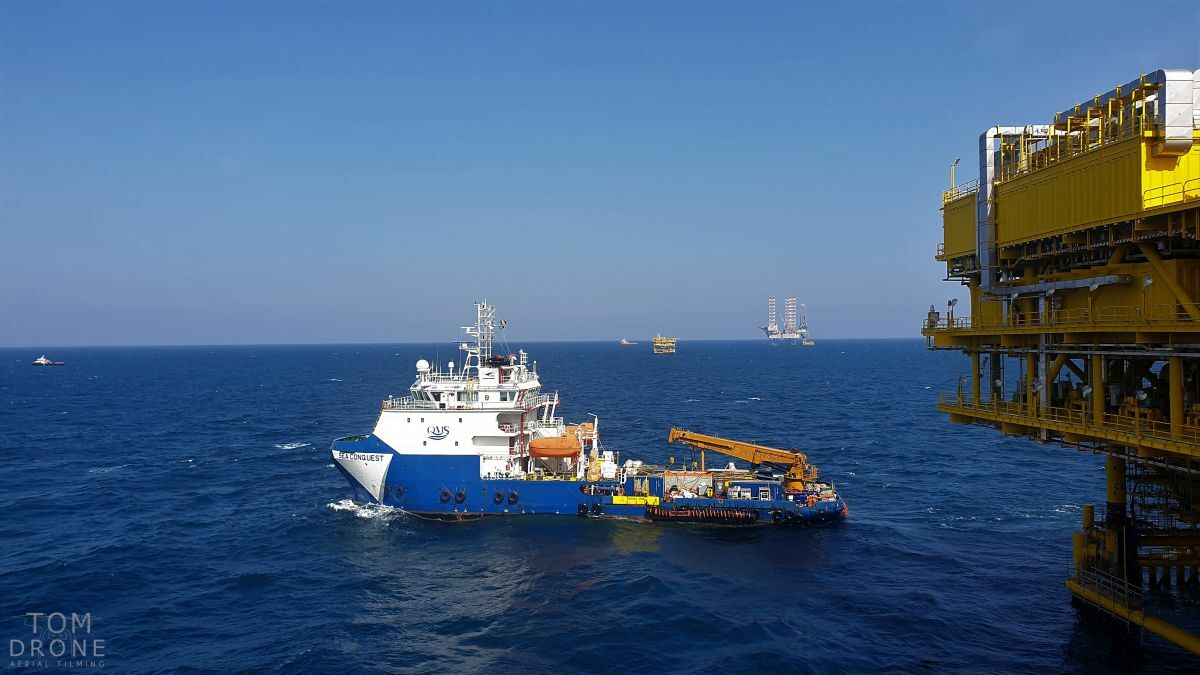
Middle East not immune to Covid-19 disruption
OSV owners operating in the Middle East have been asked for substantial discounts, as oil companies look to preserve cash


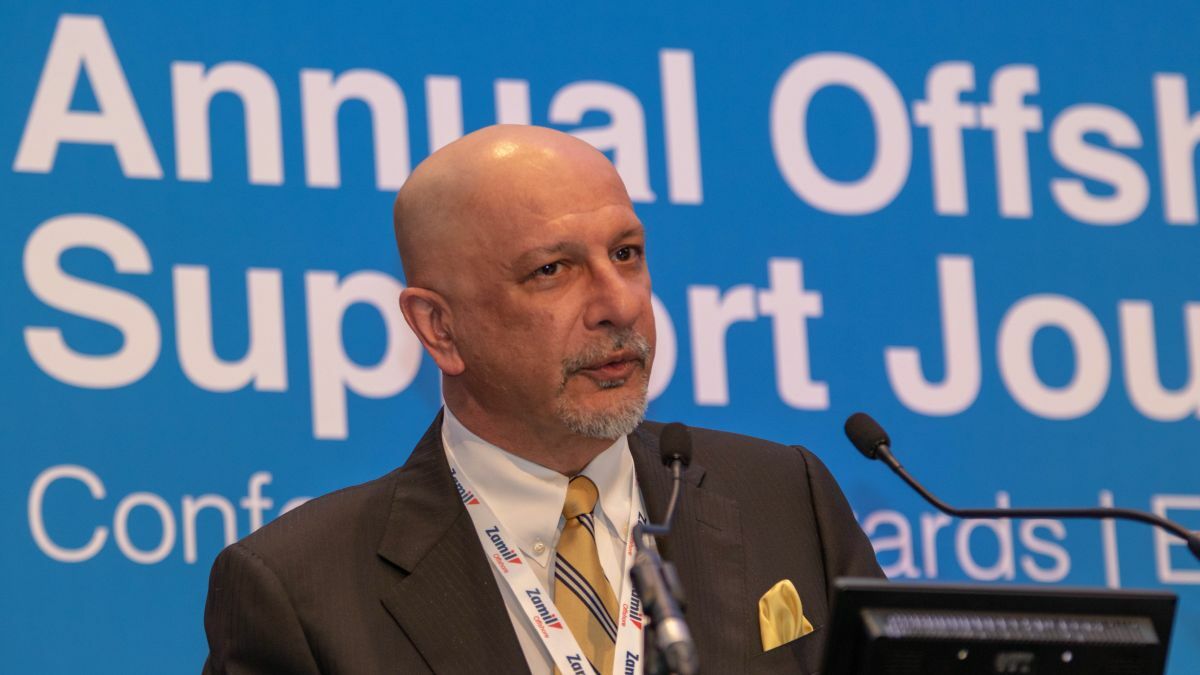
At the Annual Offshore Support Journal Conference, Awards and Exhibition in February, Synergy Offshore chief executive Fazel A Fazelbhoy was upbeat about prospects for offshore support vessels in the Middle East, describing the region as a “hotbed of activity”. With planned investments of US$334Bn in Saudi Arabia by Saudi Aramco and US$130Bn in the UAE by the Abu Dhabi National Oil Company (ADNOC), billions of dollars more for projects in Qatar, Bahrain, Kuwait and Egypt, and with improving day rates and vessel utilisation rates north of 85%, it was easy to understand Mr Fazelbhoy’s optimism; all the signs pointed towards a buoyant market.
What a difference a few months can make. “The Middle East, while retaining its position as one of the leading oil and gas regions of the world, is also feeling the heat of the coronavirus pandemic,” Mr Fazelbhoy told Offshore Support Journal recently. “An early sign of trouble was the US$1.65Bn cancellation of Petrofac’s Dalma contract (a part of the Hail and Gasha concessions) by ADNOC,” he said. “The contract was awarded in February 2020 and cancelled mid-April. This is just the beginning.”
With IOCs and national oil companies (NOCs) announcing spending cuts of 20% or more, the prospects for OSV owners have changed remarkably since the start of 2020; the one-time ‘hotbed of activity’ for OSV owners has quickly transformed into heartbreak.
“After five years of cost cutting and belt tightening, NOCs and IOCs are again turning to the supply chain to squeeze costs,” observed Mr Fazelbhoy. “OSV owners and other suppliers in the Middle East are being asked to provide up to 30% discounts on new and on existing contracts, while in West Africa, discounts can be between 25 and 40%. Some fortunate players have been able to ‘blend and extend’ and gain some contract extensions based on giving a discount.” Added Mr Fazelbhoy: “A few contractors have managed to get away with discounts of up to 5%, but others are entering into tough negotiations.”
While most contracts are continuing, utilisation is being affected. “New projects have been delayed and vessels are facing idle times between mobilisations or simply being laid off,” he said. One prominent regional OSV operator expects utilisation to drop from 90+% at the start of 2020 to around 75% by the time the coronavirus is fully digested. For the rest of the market, it is estimated that utilisation will be closer to 70%, compared to 85%+ at the start of the year.
No crew change outs
One of the biggest impacts of the Covid-19 pandemic has been on the crew. “The crew simply cannot be changed out,” said Mr Fazelbhoy. He noted that with flights suspended and countries in lockdown, crew are stranded on their vessels and are faced with extended tours of duty. “New crew simply cannot be mobilised,” he said.
As a means of easing the pressures of these extended tours of duty, some companies are offering crew bonuses, more social media and video conferencing to stay in touch with family and friends.
But the challenges don’t end there for OSV owners – there are hurdles to overcome in acquiring spare parts and equipment and if a vessel has a maintenance problem, OEM equipment specialists cannot come onboard, leaving crews dependent on their own know-how to make repairs or reliant on remote assistance.
Proposed takeover rejected
While several international OSV companies are now restructuring their finances, the impact on Middle East companies is yet to be seen. Downturns, however, inevitability lead to an increased number of proposed mergers and acquisitions. Dutch jack-up vessel owner Seafox was hoping to find a willing partner in UAE-based Gulf Marine Services (GMS).
“OSV owners and suppliers are being asked to provide up to 30% discounts on contracts”
However, the GMS board has rejected two proposed takeover bids by Seafox, characterising the offers as opportunistic and undervaluing the company.
One of the world’s largest operators of self-elevating boats, London-listed GMS says since the start of 2019 it has secured 11 contracts, increasing its backlog to US$240M. All of its available vessels have been contracted, with a current utilisation rate of 76%, up from 69% in 2019. Moving forward, GMS says it has already booked contracts that secure 49% of utilisation in 2021.
From its perspective, Seafox says challenges lie ahead for GMS. Seafox says the current low-price oil environment is requiring oil companies to significantly reduce capex and opex, which will likely lead to delays in new contracts or possibly the cancellation or renegotiation of those that have been awarded.
Both companies serve the oil and gas and renewable energy sectors, with 13 self-elevating service vessels (SESVs) in the GMS fleet and 11 self-elevating jack-up units controlled by Seafox.
Loss for Qatari OSV owner
One of the largest OSV owners in the Middle East is Qatar-based Milaha. Operated by its wholly owned subsidiary Halul Offshore, about two-thirds of the 45 vessels in Milaha’s fleet are less than 10 years old. Operating revenues in Milaha Offshore’s vessel chartering business have been rising steadily over the last three years, climbing from Qr322M (US$88M) in 2017 to Qr539M (US$145M) in 2019. Strong revenue growth of 13% year-on-year in 2019 was the result of a full year’s impact of new vessels acquired in mid-2018 and an increase in vessel utilisation, according to Milaha. Vessel impairments totaling Qr226M (US$62M) pushed Milaha Offshore’s bottom line into the red, resulting in a loss of Qr202M (US$55M).
Due for delivery this year to Milaha’s fleet are two 7,396-bhp anchor-handling tug supply (AHTS) vessels under construction at India’s Laursen and Toubro shipyard.
UAE-based Zakher Marine owns 56 vessels and has four others on order at Chinese shipyards for delivery in 2020. Those four include two 4,000-dwt platform supply vessels and a dive support vessel at Guangxin Shipbuilding, and a 7,000-bhp AHTS vessel at Hangtong.
| Large Middle East OSV Owners, By Value | ||||
| Owner | Location | Fleet | On order | Market value (US$) |
| P&O Maritime Logistics | UAE | 65 | 0 | 260.25 |
| Zamil Offshore | Saudi Arabia | 54 | 0 | 204.23 |
| Zahker Marine | UAE | 56 | 4 | 179.98 |
| Halul Offshore (Milaha) | Qatar | 43 | 2 | 172.86 |
| ADNOC Logistics & Services | UAE | 42 | 0 | 90.45 |
| Stanford Marine | UAE | 38 | 0 | 83.76 |
| Source: VesselsValue data as of May 2020 | ||||


Related to this Story


Events

Ballast Water Webinar Week
 18 May 2020
 ONLINE
Maritime Air Pollution Webinar Week
26 May 2020ONLINE
Maritime Hybrid, Electric and Fuel Cells Webinar Week
01 Jun 2020ONLINE
Offshore Wind Webinar Week
08 Jun 2020ONLINE
London Office
Riviera Maritime Media Ltd,Mitre House, 66 Abbey Road,
Enfield EN1 2QN, UK
Phone: +44 20 8364 1551
Email: [email protected]
Singapore Office
Riviera Maritime Media Singapore Pte Ltd,1 Fusionopolis Place, 03-20, Galaxis,
Singapore 138522
Phone: +65 6809 1278
Email: [email protected]


