

Contents

Publications


Publications

Contents
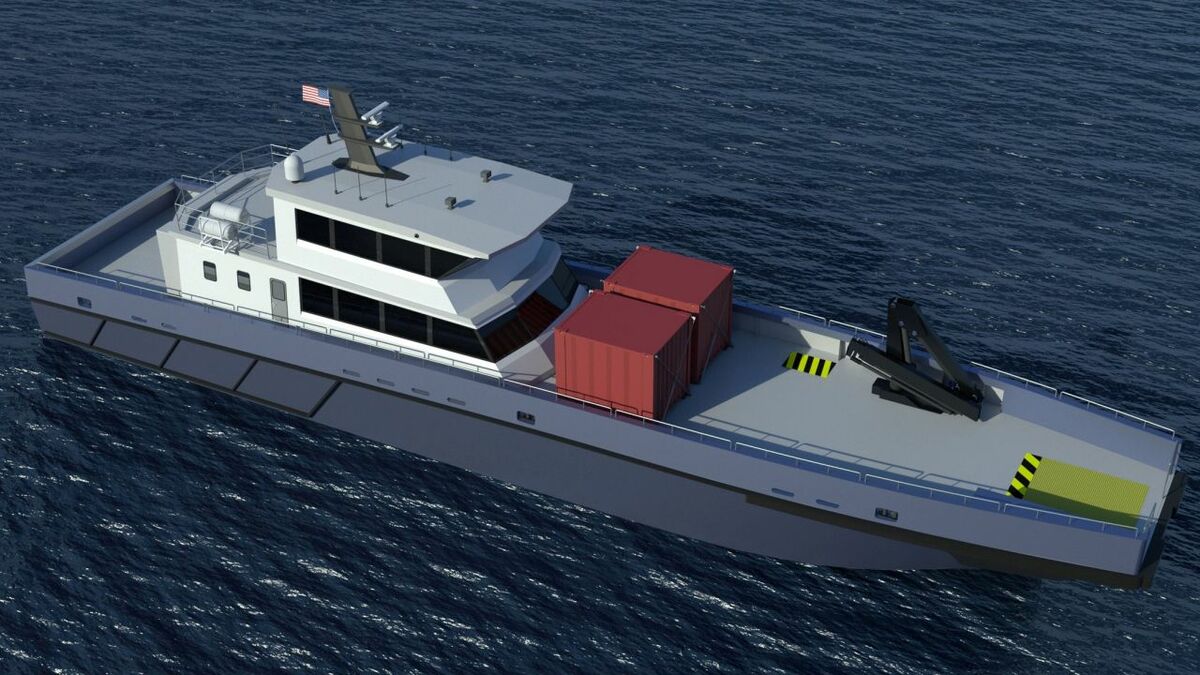
American designer unveils SATV unit for US offshore wind market
DLBA Naval Architects, part of Gibbs & Cox, has developed a service accommodation and transfer vessel (SATV) design for the US offshore wind market


It has been conceived as an alternative to conventional North Sea-type crew transfer vessel (CTV) designs, specifically for the US market and concept of operations.
The 36-m SATV was designed on the basis that US offshore windfarms are, typically, further offshore than the EU counterparts, sea conditions are different and different environmental restrictions impact vessel design and operation.
“The opportunity exists to develop a new type of vessel specifically suited for the US market in order to reduce the total cost of energy,” DLBA said. “The SATV concept presents a change in the paradigm for delivery of wind turbine service technicians to offshore windfarms via CTVs.
“In the proposed operational model, the larger vessel would make one transit to and from the windfarm fields one a week, instead of daily transits.
“The vessel is sufficiently sized to stay on site for extended periods, and outfitted appropriately to allow the service technicians to sleep on board overnight.”
DLBA’s concept is based on a semi-planing monohull of aluminium construction. Volvo IPS propulsion has been chosen to meet EPA Tier 4 requirements, minimise loss of thrust when pushing on to turbines and ease of replacement to maximise vessel availability.
The vessel is fitted with a gyro stabiliser to limit roll motions as a monohull is inherently less stiff than a catamaran of the type of hullform often adopted for CTVs in Europe, to reduce vessel motions and maximise crew effectiveness.
The vessel structure is designed to meet ABS HSC rules for heavy weather offshore operation.
Get the latest information and viewpoints on marine fuels, coatings and lubricants during Riviera Maritime Media’s series of webinar weeks on key technical subjects in shipping


Related to this Story


Events

Maritime Leaders Webinar Week
 22 Jun 2020
 ONLINE
Marine Fuels Webinar Week
29 Jun 2020ONLINE
Marine Coatings Webinar Week
06 Jul 2020ONLINE
Marine Lubricants Webinar Week
14 Jul 2020ONLINE
London Office
Riviera Maritime Media Ltd,Mitre House, 66 Abbey Road,
Enfield EN1 2QN, UK
Phone: +44 20 8364 1551
Email: [email protected]
Singapore Office
Riviera Maritime Media Singapore Pte Ltd,1 Fusionopolis Place, 03-20, Galaxis,
Singapore 138522
Phone: +65 6809 1278
Email: [email protected]


